Digital Logic Circuits: Unit IV: (a) Asynchronous Sequential Circuits
Analysis of Pulse Mode Asynchronous Circuits
• In the analysis of pulse mode asynchronous sequential circuits, circuits respond immediately to pulse on their inputs, rather than waiting for clock signal, as in synchronous sequential circuits.
Analysis of Pulse Mode Asynchronous Circuits
•
In the analysis of pulse mode asynchronous sequential circuits, circuits
respond immediately to pulse on their inputs, rather than waiting for clock
signal, as in synchronous sequential circuits. The pulse mode circuits assume
that pulses do not occur simultaneously on two or more input lines, means that
a circuit with n input lines has only n + 1 input conditions, rather than 2n,
as is the case for synchronous circuits. They also assume that a state
transition can occur only if an input pulse occurs. Hence, the memory elements
of the circuit respond only when an input pulse arrives. Keeping these
assumptions in mind, let us examine the behaviour of the pulsed asynchronous
circuit in the example 7.3.1.
Examples
for Understanding
Ex. 7.3.1 Analyse the given pulsed asynchronous sequential circuit

Sol.
:
Step
1 :
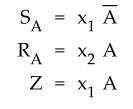
Determine the circuit excitation and output equations.
For
given circuit excitation and output equations are :
Step
2 :
Determine the next state equation of state variable.
The
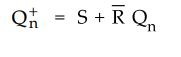
characteristic equation for SR flip-flop is
Using
the characteristic equation and excitation equations we have the state variable
next state equation is as follows :

Step
3 :
Construct the state variable transition table.
From
next state and output equations we can construct the state variable transition
table indicating state variables, input variables, next state values and the
output value.

Step 4: Derive the flow table and state diagram.
From
the state variable transition table we can derive the flow table and from flow
table we can derive the state diagram as shown in the Fig. 7.3.3. The flow
diagram can be constructed by replacing next state and state variable values by
actual states S1 = 0 and S1 = 1.

Step
5 :
Draw the timing diagram.

The
Fig. 7.3.4 shows the timing diagram for the pulse mode circuit shown in the
Fig. 7.3.1. As shown in the timing diagram, the inputs are the pulses and they
occur one at a time.
Ex.
7.3.2 Consider the asynchronous sequential circuit which is driven by the
pulses, as shown in the Fig. 7.3.5. Analyze the circuit.

Sol.
:
The circuit has two NAND gate latches that generate the state variables, A and
B. The circuit has four input variables W, X, Y and Z and one output variable
C.
Step
1 :
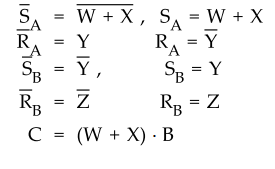
Determine the circuit excitation and output equations.
From
the given sequential circuit we can have excitation and output equations as
follows :
Step
2 :
Determine next state equations for state variables.
The
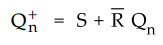
characteristic equation for SR flip-flop is
Using
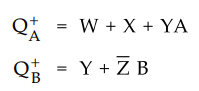
the characteristic equation and excitation equations we have the state variable
next-state equations as follows
Step
3 :
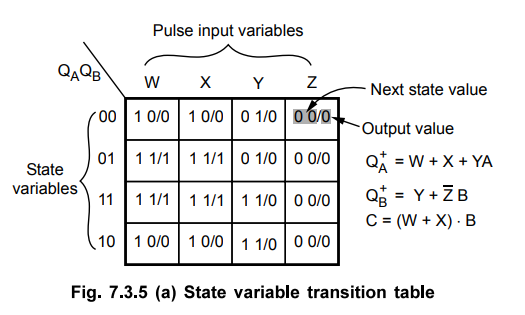
Construct the state variable transition table. From these next state and output
equations we can construct the state variable transition table indicating state
variables, input variables, next state values and the output-state.
Step
4:
Derive the flow table and state diagram.
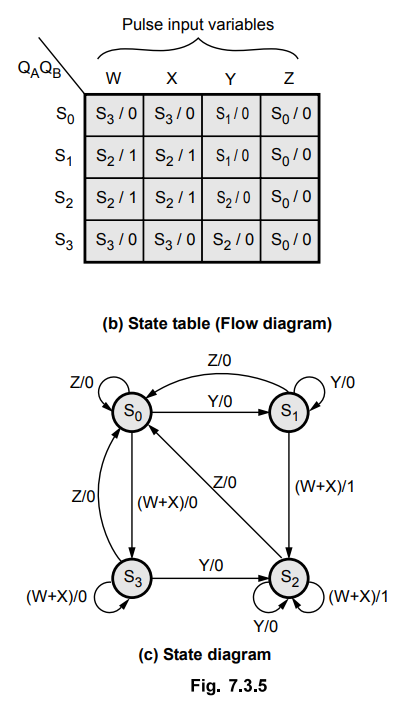
From
the state variable transition table we can derive the flow table and from flow
table we can derive the state diagram as shown in the Fig. 7.3.5 (b) and (c).
The flow diagram can be constructed by replacing next state and state variable
values by actual states
(S0
= 00, S1 = 01, S2 = 11 and S3 = 10).
Ex.
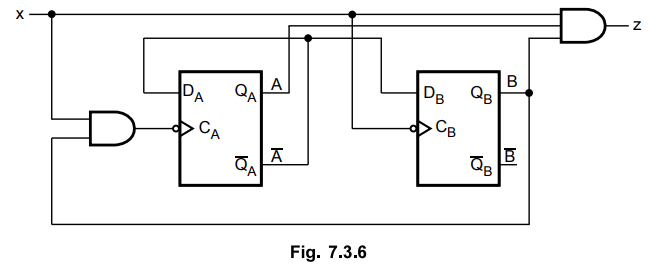
7.3.3 Consider the asynchronous sequential circuit driven by the pulses shown
in Fig. 7.3.6. Analyze the circuit and draw the timing diagram.
Sol.
:
Step
1 :
Determine the circuit excitation and output equations.
From
the given sequential circuit we can have excitation and output equations as
follows :

Step
2 :
Determine the next state equations for state variables.
The
characteristic equation for D flip-flop is
Q+n
= D and considering clock input it is given as
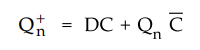
Using
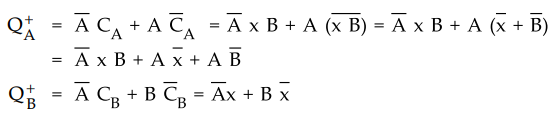
the characteristic equation and excitation equations we have the state variable
next state equations as follows :
Step
3 :
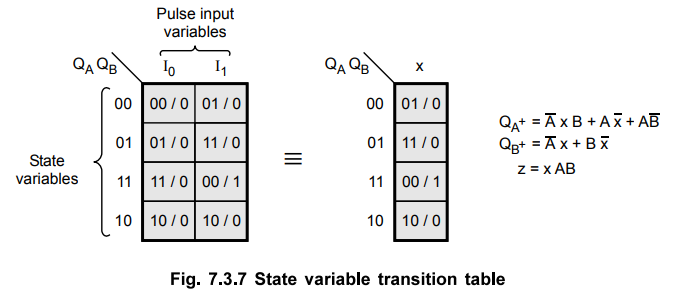
Construct the state variable transition table.
From
these next state and output equations we can construct the state variable
transition table indicating state variables, input variables, next state values
and the output state.
A
state variable transition table may be compiled for this circuit if we define
the following.
Input:
I0 = No pulse on x
I1
= Pulse on x
States
:
AB : 00, 01, 10, 11
Output:
z = 0, z = 1
Step
4:
Derive the flow table and state diagram.
From
the state variable transition table we can derive the flow table and from flow
table we can derive the state diagram as shown in the Fig. 7.3.8. The flow
diagram can be constructed by replacing next state and state variable values by
actual states
(S0
= 00, S1 = 01, S2 = 11 and S3 = 10).

Step
5 :
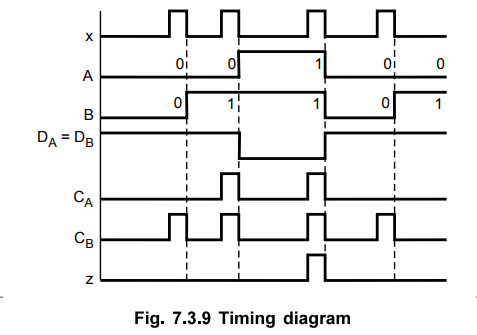
Draw the timing diagram.
The
Fig. 7.3.9 shows the timing diagram for the given circuit.
Example
for Practice
Ex.
7.3.4 Analyze the pulse-mode circuit shown in Fig. 7.3.10. Determine flow table
and state diagram.

Review Question
1. Describe the procedure of analysis of pulse mode asynchronous
circuit with the help of example.
Digital Logic Circuits: Unit IV: (a) Asynchronous Sequential Circuits : Tag: : - Analysis of Pulse Mode Asynchronous Circuits
Digital Logic Circuits: Unit IV: (a) Asynchronous Sequential Circuits
Under Subject
Digital Logic Circuits
EE3302 3rd Semester EEE Dept | 2021 Regulation | 3rd Semester EEE Dept 2021 Regulation
Related Subjects
Probability and complex function
MA3303 3rd Semester EEE Dept | 2021 Regulation | 3rd Semester EEE Dept 2021 Regulation

Electromagnetic Theory
EE3301 3rd Semester EEE Dept | 2021 Regulation | 3rd Semester EEE Dept 2021 Regulation
Digital Logic Circuits
EE3302 3rd Semester EEE Dept | 2021 Regulation | 3rd Semester EEE Dept 2021 Regulation
Electron Devices and Circuits
EC3301 3rd Semester EEE Dept | 2021 Regulation | 3rd Semester EEE Dept 2021 Regulation

Electrical Machines I
EE3303 EM 1 3rd Semester EEE Dept | 2021 Regulation | 3rd Semester EEE Dept 2021 Regulation
C Programming and Data Structures
CS3353 3rd Semester EEE, ECE Dept | 2021 Regulation | 3rd Semester EEE Dept 2021 Regulation